How to choose the right insulation for a metal building
A practical guide to choosing insulation for a metal building in Clinton, UT: R-values, spray foam vs fiberglass, condensation control, and 2026 cost ranges.
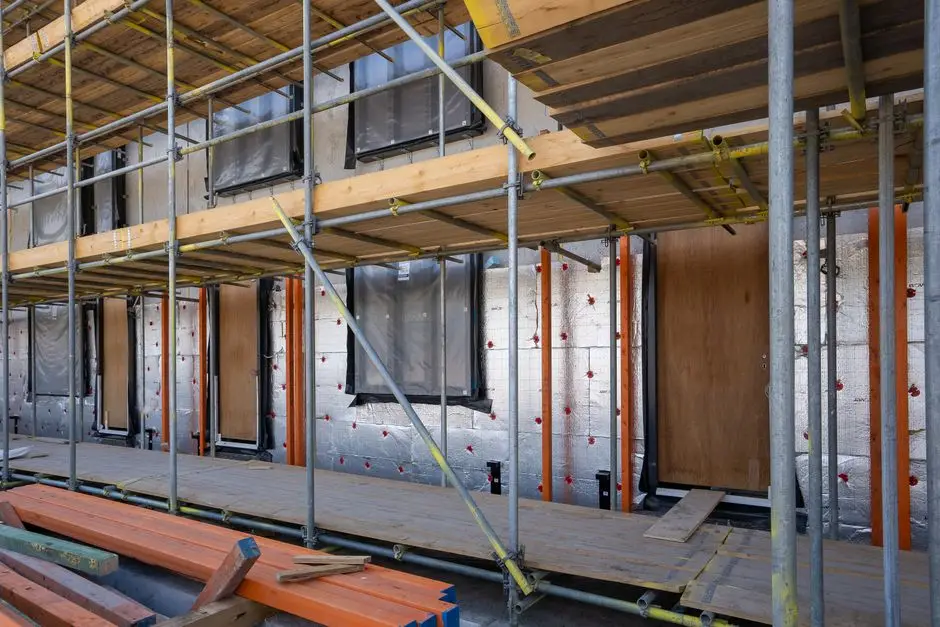
Choosing insulation for a metal building comes down to three things: how you use the space, the R-value your climate demands, and whether you can control condensation. In Clinton, Utah, that usually means R-13 to R-19 for a shop or garage and R-25 or higher for a heated living space, with a vapor barrier on the warm side of the assembly. This guide walks through the options, the costs, and the mistakes we see most often in steel buildings along the Wasatch Front.
If you have ever walked into a metal shop in January and felt the cold radiate off the walls, you already know why this matters. Bare steel panels have almost no insulating value - roughly R-1. Every dollar you spend on insulation is a dollar you stop handing to Rocky Mountain Power.
We install Metal Building Insulation Clinton UT in shops, barns, garages, and barndominiums all over Davis County. Here is how we help customers decide.
Start With How You Use the Building
The single biggest factor in choosing insulation for a metal building is what happens inside it. A storage shed that sees foot traffic twice a month needs a very different assembly than a woodshop running a heater eight hours a day.
Ask yourself three questions:
- Will you heat or cool it? If yes, you need a real thermal envelope - walls, ceiling, and doors.
- Will moisture be present? Welding, washing cars, livestock, or propane heaters all dump water vapor into the air.
- How long will you own it? Insulation that lasts 30 years costs less per year than a cheap option you replace in eight.
For a typical Clinton garage or hobby shop, we recommend insulating the walls and ceiling together. Doing only the ceiling leaves the biggest surface - the walls - working against you. If you are also tightening up a house on the same property, our Home Insulation Clinton UT crew can handle both in one visit.
Understand R-Value and Clinton's Climate
R-value measures how well a material resists heat flow. Higher is better, but the number you need depends on where the building sits and what it is used for.
Clinton sits in the northern Wasatch Front, where winter design temperatures drop to around 5°F and summer afternoons push past 95°F. That swing is brutal on metal. Steel conducts heat roughly 300 times faster than wood, so an uninsulated panel acts like a radiator in reverse.
Here is the range we spec for local metal buildings:
- Unheated storage: R-6 to R-10 (mostly to stop condensation, not to save energy)
- Heated shop or garage: R-13 to R-19 walls, R-19 to R-30 ceiling
- Barndominium or living space: R-21 to R-25 walls, R-38 to R-49 ceiling
Those ceiling numbers matter more than most people expect. Heat rises, and in a metal building the roof is where you lose the most. We see plenty of Clinton shops with decent wall insulation and a bare metal ceiling - they still freeze in February.
Metal Building Insulation Types Compared
There are five options that actually make sense for a steel building in this area. Each has a place.
Fiberglass Batt with Facing
The traditional choice. Rolls of fiberglass with a white vinyl or foil facing, installed between the girts and purlins before the exterior panels go on. It is the cheapest way to hit R-13 to R-19, and it is what most kit manufacturers ship with. The facing acts as a vapor retarder when taped properly. Our Fiberglass Insulation Clinton UT team installs this almost daily.
Spray Foam
Closed-cell spray foam gives you the highest R-value per inch - around R-6.5 to R-7 per inch - plus an air seal and a built-in vapor barrier. It is the best answer for buildings with moisture problems or tricky geometry. It is also the most expensive per square foot.
Rigid Foam Board
Polyiso or EPS boards go up fast and add a thermal break between the steel and the interior. Good for retrofits where you cannot remove the exterior panels. Our Foam Board Insulation Clinton UT installs are usually paired with a spray foam air seal at the seams.
Reflective Foil and Double Bubble
Thin reflective products work as radiant barriers, not as true insulation. In a Clinton summer they cut attic heat noticeably. In January they do almost nothing. Use them as a supplement, never as your only layer.
Mineral Wool
Rockwool handles fire and sound better than fiberglass and does not sag. It costs more, but for a welding shop or a building near a bedroom, it is worth the upgrade.
Spray Foam vs Fiberglass for Metal Buildings
This is the question we get asked most, and the honest answer is that it depends on moisture and budget. Spray foam wins on performance. Fiberglass wins on price.
Choose spray foam if:
- The building will see welding, car washing, or livestock
- You are heating it year-round and want the lowest utility bill
- The framing is irregular or hard to seal with batts
Choose fiberglass if:
- You are insulating during construction and want the lowest upfront cost
- The building is dry and used mainly for storage
- You need to hit a specific budget number
For a 30x40 shop in Clinton, spray foam typically runs 2.5 to 3 times the cost of fiberglass batts. It also cuts air leakage by 80% or more, which is where most of the real savings come from. If you want the full breakdown, our Spray Foam Insulation Clinton UT page covers the install process step by step.
Condensation: The Problem Nobody Warns You About
Condensation destroys more metal buildings in Utah than cold does. Warm moist air hits a cold steel panel, and water beads on the inside of your roof. Over a winter, that water rusts fasteners, stains your equipment, and soaks anything stored against the wall.
The fix is a continuous vapor retarder on the warm side of the insulation, plus ventilation. A few rules we follow:
- Face the vapor barrier toward the heated space, not the steel.
- Tape every seam. Gaps defeat the whole assembly.
- Do not sandwich fiberglass between two vapor barriers - it traps moisture.
- Ventilate if you run propane heaters or weld.
If you already have condensation dripping from the ceiling, do not just add more batts. The moisture is coming from somewhere, and covering it up makes the problem worse. We see this a lot in older buildings around Insulation in Downtown Clinton, where shops built in the 1980s are still running original, unsealed assemblies.
How Much Does Metal Building Insulation Cost in Clinton UT?
Typical 2026 pricing in this area runs $1.50 to $3.50 per square foot installed for fiberglass, and $4.00 to $7.50 per square foot for closed-cell spray foam. Rigid foam board lands in between, around $2.50 to $4.50 per square foot.
For a real number, here is what a 30x40x12 shop looks like:
- Walls only, fiberglass: $2,400 to $4,200
- Walls and ceiling, fiberglass: $5,500 to $9,000
- Walls and ceiling, spray foam: $12,000 to $19,000
Those ranges assume the building is empty and the exterior panels are already off or accessible. Retrofits cost more because we have to work around shelving, lifts, and wiring. If you are comparing bids, make sure each one specifies the R-value, the product brand, and whether the vapor barrier is taped. A cheap bid that skips the tape is not a cheaper job - it is a different job.
Common Mistakes We See in Clinton Shops and Barns
Most metal building insulation failures trace back to one of five mistakes. We have fixed all of them.
- Insulating the ceiling only. The walls are the bigger surface area. Do both or do neither.
- Skipping the vapor barrier. A $200 roll of tape saves a $6,000 rust repair.
- Compressing fiberglass. Squishing a batt to fit cuts its R-value by 30% or more.
- Leaving gaps at the girts. Steel framing creates thermal bridges. Every gap is a leak.
- Using reflective foil as the only layer. It is a radiant barrier, not insulation.
We also see homeowners try to insulate a metal building the same way they would a wood-frame house. The methods are different. Steel moves with temperature, and any insulation that cannot flex with it will pull away from the framing within a couple of seasons.
When to Call a Professional
You can insulate a small, simple metal shed yourself. Once the building has electrical runs, plumbing, a heater, or a finished interior, the math changes. A bad install is expensive to undo.
Call us if:
- The building is over 600 square feet
- You have condensation or rust on the interior panels
- You are insulating a barndominium or any space with living quarters
- You want a warranty on the work
Sealwise Vale handles metal building insulation across Clinton and the surrounding Davis County communities. We measure the building, spec the assembly, and install it in one or two days for most shops. If you are also tightening up an attached garage door, we can address that in the same visit.
Frequently Asked Questions
What is the best insulation for a metal building in Clinton UT?
Closed-cell spray foam is the best performer for heated Clinton shops, delivering R-6.5 per inch plus an air seal and vapor barrier. Fiberglass batts with a taped facing are the best value for unheated storage. Most local buildings land somewhere between those two, depending on budget and moisture.
How do I choose insulation for a metal building in Utah?
Match the R-value to the use: R-6 to R-10 for storage, R-13 to R-19 for a heated shop, and R-21 or higher for living space. Then pick the material based on moisture. Utah's dry summers help, but winter condensation is the real enemy in steel buildings.
Should I use spray foam or fiberglass in a metal building in Clinton?
Use spray foam if the building will be heated daily, sees moisture, or has irregular framing. Use fiberglass if it is dry, unheated, and you need to hit a lower budget. Spray foam costs 2.5 to 3 times more upfront but cuts air leakage by 80% or more.
How much does metal building insulation cost in Clinton UT?
In 2026, expect $1.50 to $3.50 per square foot installed for fiberglass and $4.00 to $7.50 per square foot for closed-cell spray foam. A 30x40 shop typically runs $5,500 to $9,000 for fiberglass walls and ceiling, or $12,000 to $19,000 for spray foam.
Can I insulate a metal building myself in Clinton Utah?
Yes, for a small, simple, unheated shed under about 600 square feet. Once the building has wiring, plumbing, a heater, or finished interior surfaces, the risk of trapping moisture or creating thermal bridges goes up sharply. That is when a professional install pays for itself.
Get Help With Insulation in Clinton
If you want a metal building that stays warm in January and dry in April, we can spec and install the right assembly the first time. Call Sealwise Vale at (855) 927-7517 and we will walk your building, measure it, and give you a straight number.